
Capitalism cheats
In Venezuela and elsewhere
Before we get started with my regularly scheduled verbose ranting about the state of the world, some news:
At long last, Billionaires & Guillotines, the board game, is available for preorder from Pluto Press! It’ll be in stores on February 15. Those who ordered via our Kickstarter campaign last year: your copies will soon be on their way!
A quick request: if you’ve already played the game, could you please give it a rating or review over at Board Game Geek? It really makes a difference for us as we try and get this game to more people. If you do, you can enter to win a free copy of the the game and the expansion.
In any case, check out the new game website, including information on the Winter/Spring 2026 tour with events all over the UK and some in Europe. Oh, and you can also buy shirts, mugs, stickers and other merch at our online store.
Well, this is a nightmare, and there is no reason to pretend otherwise. It’s not that anyone familiar the US’s murderous legacy in Latin America is surprised. Nor should we fall prey to some desperate nostalgia for the era of neoliberal internationalism that now bleeds out from its mortal wounds. The regime in Washington celebrates the return of the genocidal Monroe Doctrine without any shame. Any honest accounting will reveal that US imperialism in the Americas and beyond has never disappeared, it just wore nicer clothes and knew better than to laugh with its mouth full of flesh.
As the news of the kidnapping of Maduro was seeping into the world, I was working on the finishing touches of a paper that is relevant, but probably useless: “Capitalism cheats: Three moments of normalized swindling,” which will come out in a future issue of the journal Finance and Society and is available here. Parts of it are also in my forthcoming book The Player and the Played: From Gamed Capitalism to 21st Century Fascism (due out from MIT later this year).
It sketches “a pattern where cheating is integrated into the very ideological and operational core of capitalism.”
I’m sharing it now because it seems relevant.
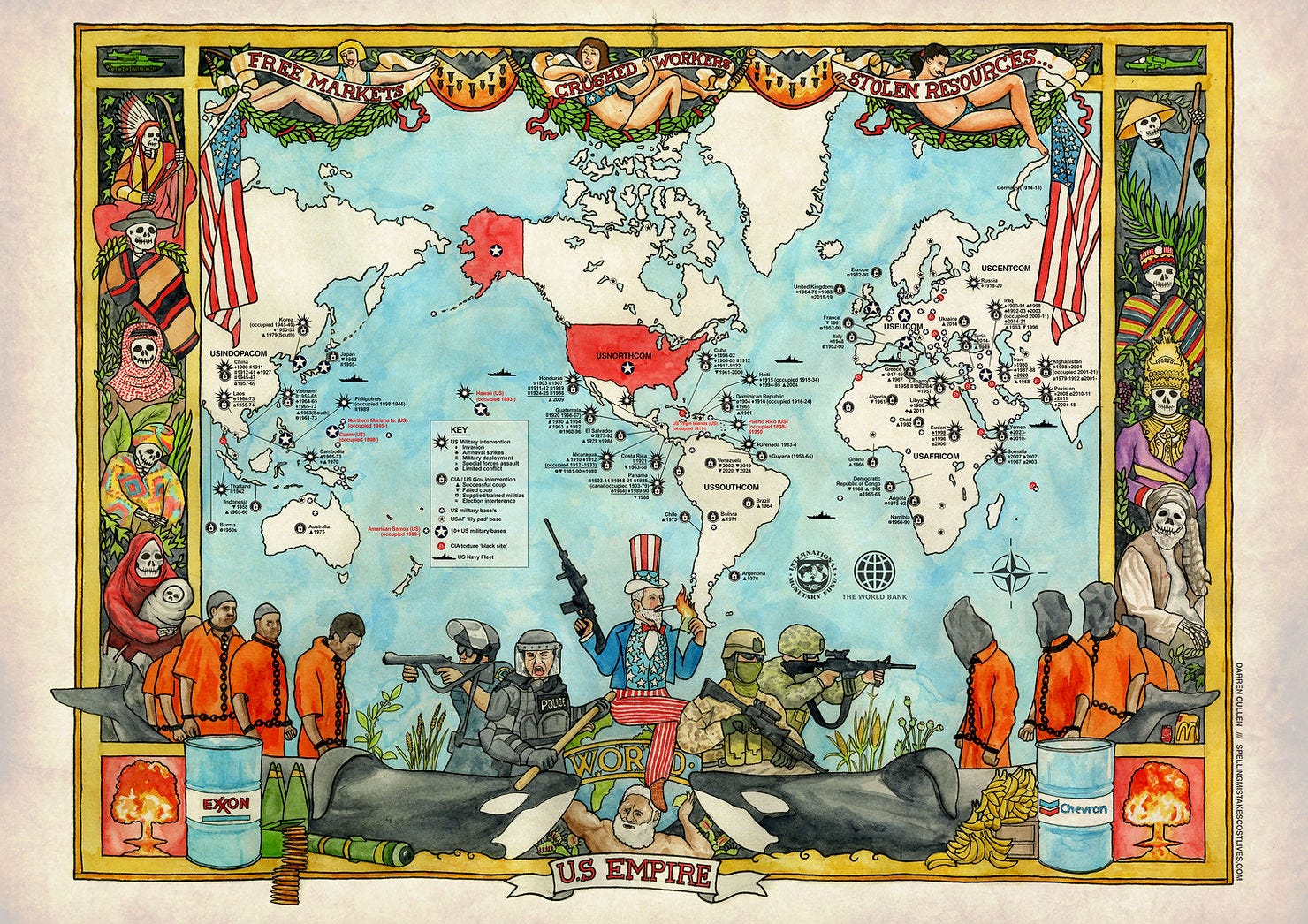
Beloved cheats who hate cheats
The paper begins with a question quite similar to the one that animates my forthcoming book:
Why is it that today’s far-right, fascistic, and reactionary politicians, influencers, and personalities so successfully mobilize vitriol against supposed cheaters? Donald Trump is only the most famous example in his claims that he must be given profoundly antidemocratic powers to save democracy from cheats…
[He] and other far-right political revanchists mobilize a public rhetoric that revolves around fostering the anger of manufactured majorities against what I will call the ‘cheating other’, minorities who are rumored to be defrauding society and refusing to play by the rules. The claim is often that this cheating has either been intentionally allowed by venal political elites or permitted because of the stupidity and gullibility of liberal or left-wing policies, and that matters have become so dire and corrupt that it requires radical actions that contravene the law, human rights, and other such inconveniences.
And yet the success of Trump’s anti-cheating crusade is
all the more surprising given that he is himself a convicted cheat, and proud of it. His policies have hamstrung or completely eliminated many government bodies tasked with controlling corporate crime and he has used Presidential fiat to pardon multiple notorious wealthy cheats. It appears almost certain the he cynically deployed his bellicose threats of tariffs to undertake one of the world’s most staggering acts of insider trading and that he has deployed a cryptocurrency as a means to essentially sell political influence in plain sight.
But Trump is only the most egregious, telegenic, and bombastic of many such characters [around the world]… All of them are illiberal democratic autocrats who have wielded accusations of widespread cheating to fuel pro-market reactionary politics, while at the same time overseeing parties or regimes that are significantly built on cheating.
Part of the answer of what makes these figures so attractive is that
[neoliberal financialized capitalism] has compelled most people to adopt the agency of the player: the savvy, risk-taking, exploit-seeking homo oeconomicus, competing to survive and thrive in an austere world. It is in this context that a reactionary politics takes root around a set of feelings related to feeling cheated – not cheated of one’s entitlement to a share of social wealth, but of one’s right to compete.
Capitalism is built on cheating
This helps explain why our economy is so preoccupied with industries, metaphors, political rhetoric, and popular culture (eg. Squid Game) tied to games and cheating.
But my argument seeks to go deeper. The paper goes on to
excavate three moments in the genealogy of contemporary financialized neoliberal capitalism where we can observe cheating at the very center of its operations, not simply because certain cheating individuals or institutions hold pivotal roles, but because forms of activity that can very well be understood to be cheating are incorporated into the core operations of the system.
In other words, cheating is not exceptional or abnormal in capitalism: it is central to how capitalism works.
I explore this in three cases:
Imperialism’s ‘Great Game’,
The links between game theory and neoliberalism, and
The role of recursive rule-breaking in the history of finance
Before concluding on some notes about the spoilsport.
Imperialism’s Great Game Scam
I want to dwell on this section a bit because it is particularly relevant to current global affairs. While Trumps kidnapping of Maduro and impending vassalization of Venezuela is mostly a naked show of force, it is also resonant with a longer pattern.
Maduro is accused (probably correctly) of cheating his people out of their democratic will (at least in the limited context of the 2018 election), of cheating the US through nefarious drug smuggling (almost certainly false), and of cheating US corporations of their entitlement to it’s oil reserves (deranged).
This then justifies the US to cheat international law (such as it is) and the norms of international relations, as well as the US law that dictates that foreign wars cannot be executed by Presidential fiat.
This is of a piece with a long history of imperialism, where the accusation that the racialized other is cheating is used as a justification for imperialist cheating, undertaken (cynically) in the name of imposing the ‘rule of law’ and economic ‘fair play.’
Of course, in the case of Trump’s imperialism, the fig-leaf of humanitarianism has fallen by the wayside and the imperial prick flaps in the wind for all to see. Trump is a proud cheat, and he cheats in full view, to demonstrate his power, the only thing he truly believes in.
In any case, in the paper I draw on Hannah Arendt’s attempt, in The Origins of Totalitarianism (a book about which I have quite ambivalent feelings), to
trace the murderous dehumanization of fascism back to its birthplace in European colonialism and imperialism… [via] the metaphor of the Great Game, [which was] widely used in Britain and elsewhere in the nineteenth century to refer to the way empires played out their rivalries on a world imagined as a giant chessboard, drawing on that term’s most famous (and cynical) exponent, Rudyard Kipling.
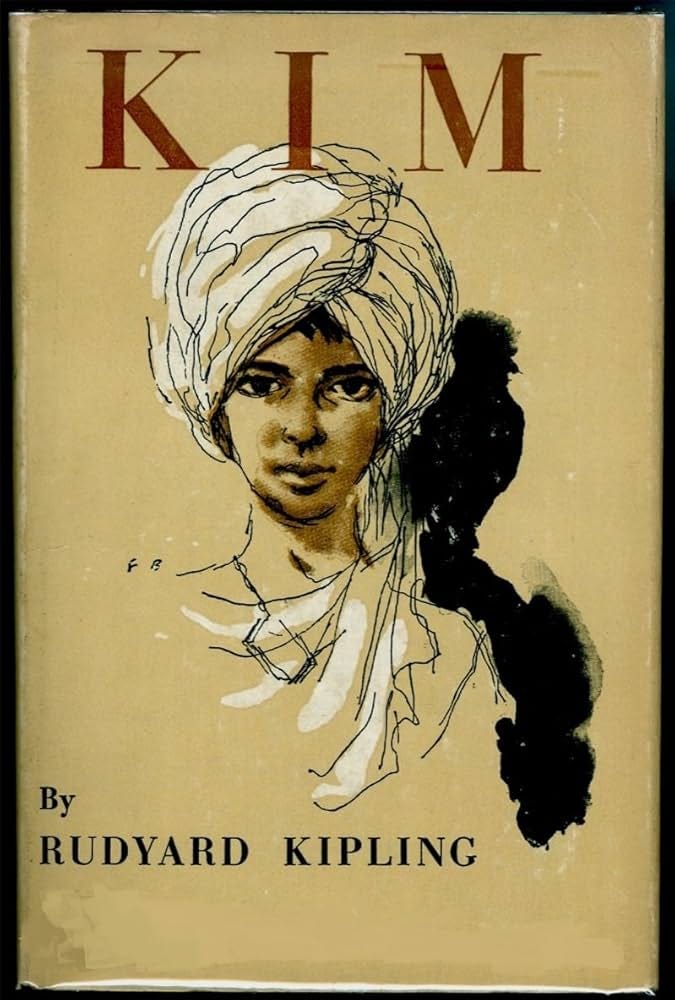
As today, in the age of high empire
many British and other imperialists sanctimoniously pronounced that they came as saviors, to bring the values of ‘fair play’ (including ‘free’ market competition) and to impose the ‘rule of law’ wherein all subjects have formal equality. Of course, this was a lie, even if many imperialists were delusional enough to believe it. The game was rigged. It was a sine qua non of early European imperialism to impose preferential or exclusive trading treaties or relations on the territories they dominated, and also to insist that Europeans be immune to the laws that governed local non-European populations.
Europeans typically imposed a form of capricious, bureaucratic, self-serving, and increasingly violent tyranny. This was conventionally justified in one of two ways: either as stern but necessary tutelage for a backwards people, who were deemed ‘not ready’ to play the real game of civilization, or simply by insisting that colonized people’s inherent racial inferiority required European powers to ‘protect’ them from predation.
I gloss here Lisa Lowe’s phenomenal work on the European (especially British) liberal justifications for the Opium Wars, where the destructive drug, grown on European plantations in India, was forced on China as a means to rob the world’s largest nation. These frequently revolved around notions of 'fair play’ and the need to teach the supposedly backward and despot-loving Chinese people
From imperialism to to racism to fascism
Arendt singles our Cecil Rhodes for special scorn, but sees him as the logical and terrible result of this kind of normalized cheating, and a predecessor to the horrors of Fasicsm in Europe. She writes:
as Rhodes was insane enough to say, he could indeed ‘do nothing wrong, what he did became right. It was his duty to do what he wanted. He felt himself a god-nothing less.’... It is obvious that these secret and anonymous agents of the force of expansion felt no obligation to man-made laws. The only ‘law’ they obeyed was the ‘law’ of expansion, and the only proof of their ‘lawfulness’ was success.
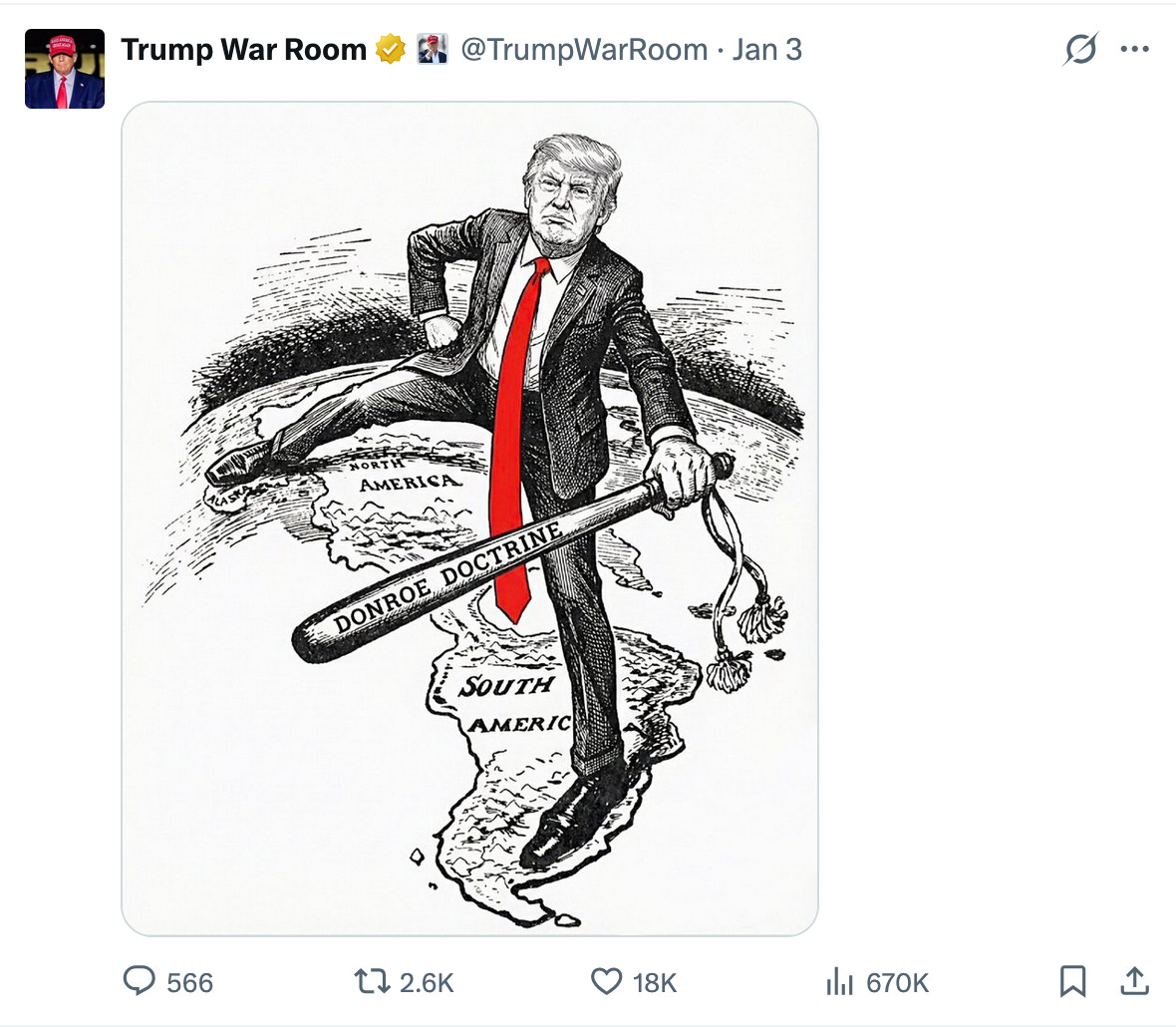
I continue:
Here, the cheat lionizes himself as animated by an ancient and timeless, if ultimately nihilistic, wisdom: power rules, and power is all that that has ever been or ever will be. Cheating is merely the natural expression of power, the prerogative to flaunt or ignore the laws and rules set in place based on the delusion that the world could be fair. Here, Rhodes gives us in naked form what Nazi jurist Carl Schmidt would later dress in Hugo Boss philosophical livery: power ultimately is getting to make rules (and punish transgressors), but never having to obey them
This ideology, which morphs from free market boosterism to colonial apologia to outright fascism is, of course, very much with us to this day, in “the idea that racialized and colonized people are cheating, or cannot be trusted not to cheat, or are too benighted to be able to truly understand or respect the rules of ‘the game’ (and therefore need to be excluded, protected, or eliminated).”
It is part of the racist ideological reservoir on which contemporary reactionary, ethnonationalist, and fascistic politicians and commentators draw when they point to migrants ‘cheating’ the system. They stoke fears that too many immigrants will jeopardize not only the economies but also the values of Western democracies – values often framed through notions of fair play and the level playing ground of the market.
In many countries, the figure of the state benefits cheat is racialized, notably in the US where Ronald Reagan popularized the term ‘welfare queen’ with conspicuous reference to a Black woman, or where the term ‘anchor baby’ is indelibly associated with racialized women who allegedly plan to deliver children in the US to game the birthright citizenship statutes of that country’s immigration system. In the UK, the figure of the ‘benefits scrounger’ cannot be separated from racialized implications, even if many of the journalists, politicians, and blowhards who mobilize it insist they are color-blind.
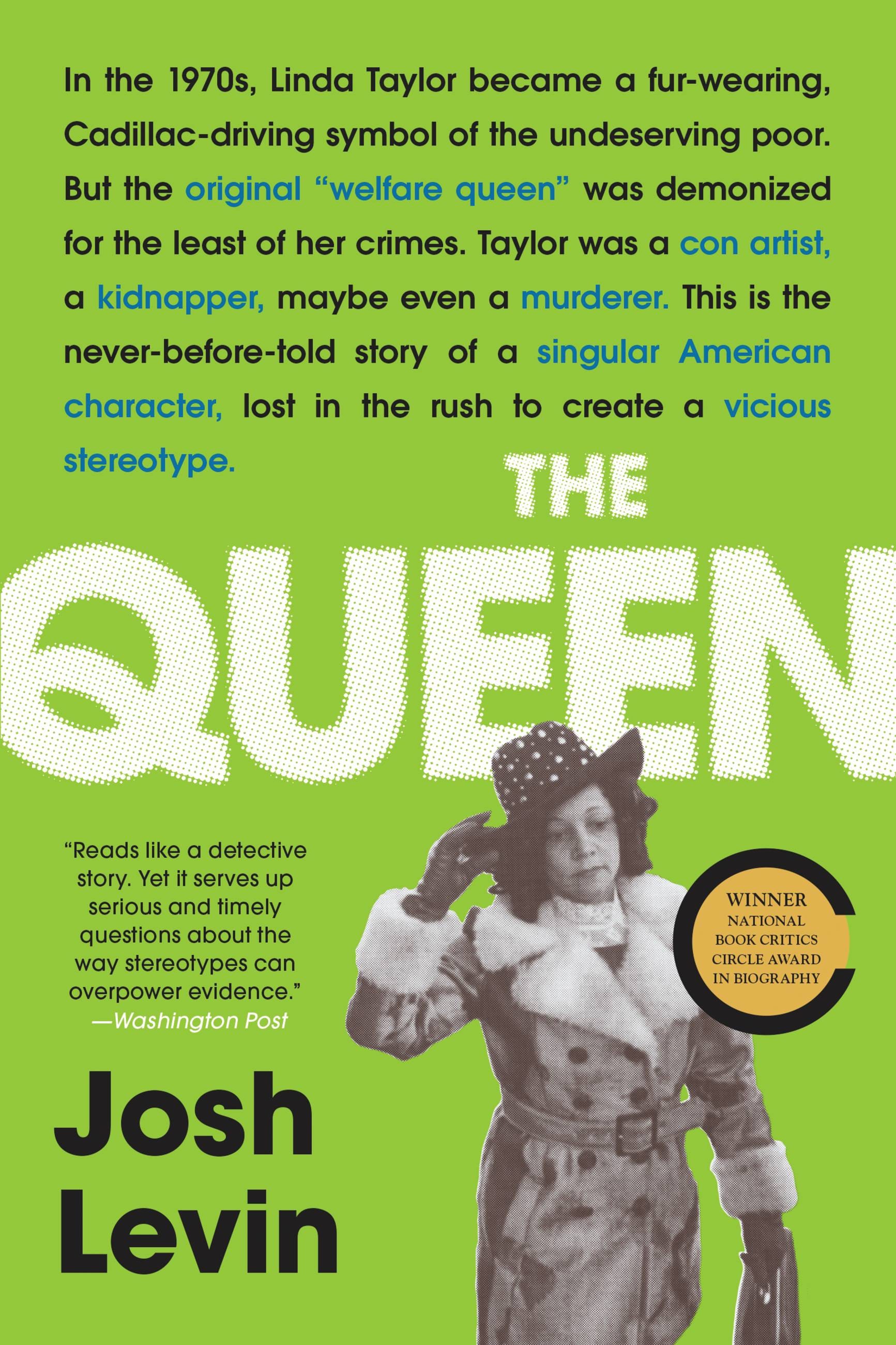
But lest we nurse any nostalgia for the usurped liberal order, let’s remember that
In the post-war period, this association of non-European others as incompetent players or cheats has also been a justification for new forms of neoimperialism. Many of the brutal policies of the International Monetary Fund and World Bank, which railroaded governments in the Global South into adopting neoliberal policies, was imposed in the name of fighting or preventing corruption – that is, the alleged cheating of the free-market system. For a century, the ‘West’ has supported dictatorial, authoritarian, and fascistic regimes in the Global South based on the presumption that the nation in question was ‘not ready’ to play the game of democracy fairly. In fact, the goal has either been to ensure countries in the Global North (or their corporations) maintained access to resources or to prevent socialist governments from being elected to power.
Game theory and the necessity of cheating
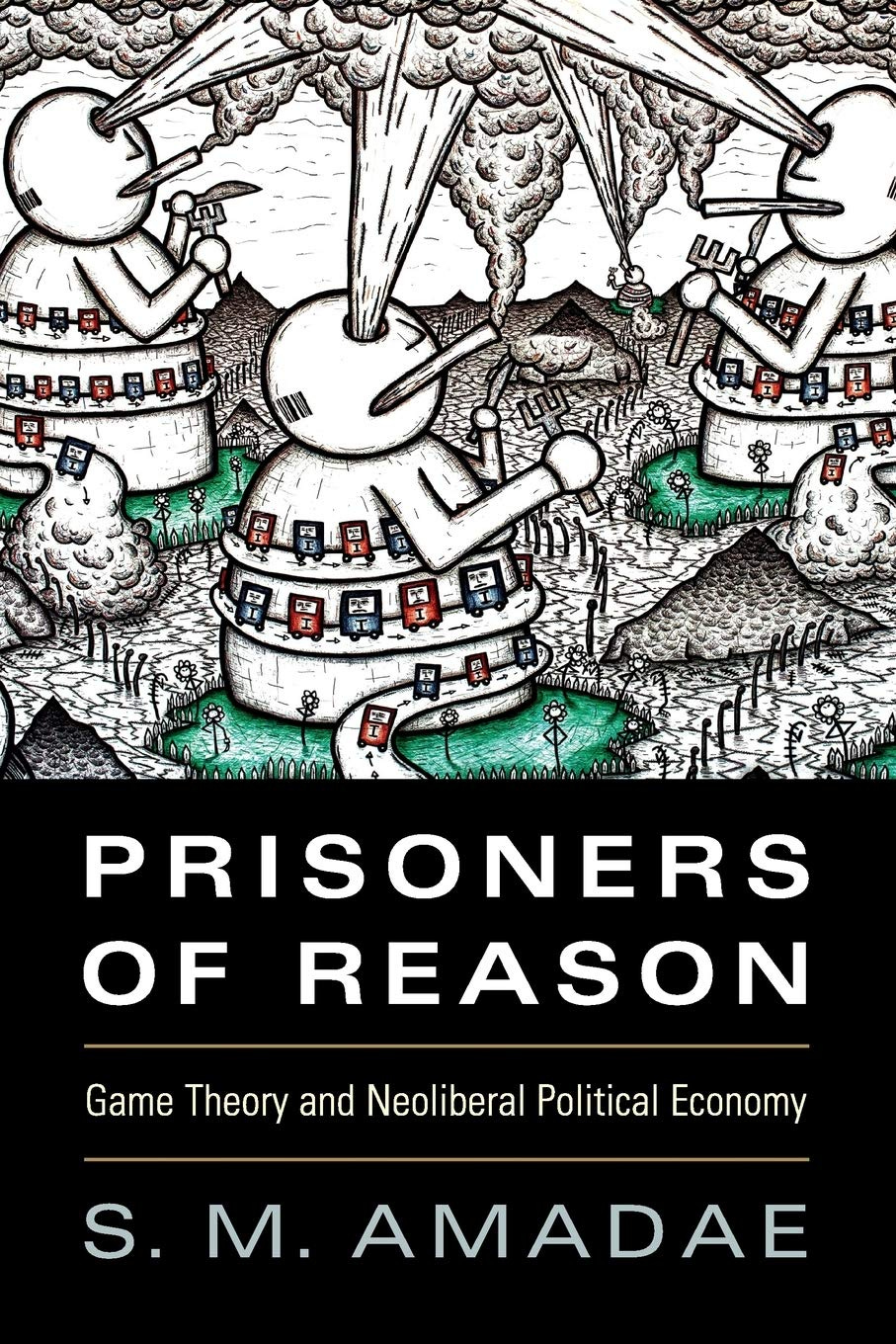
Briefly, the section on game theory build’s on the work of S. M. Amadae (whom I interviewed for a podcast a few years ago) to see it as a crucial element of the neoliberal revolution. It’s most famous articulation is probably the Prisoner’s Dilemma.
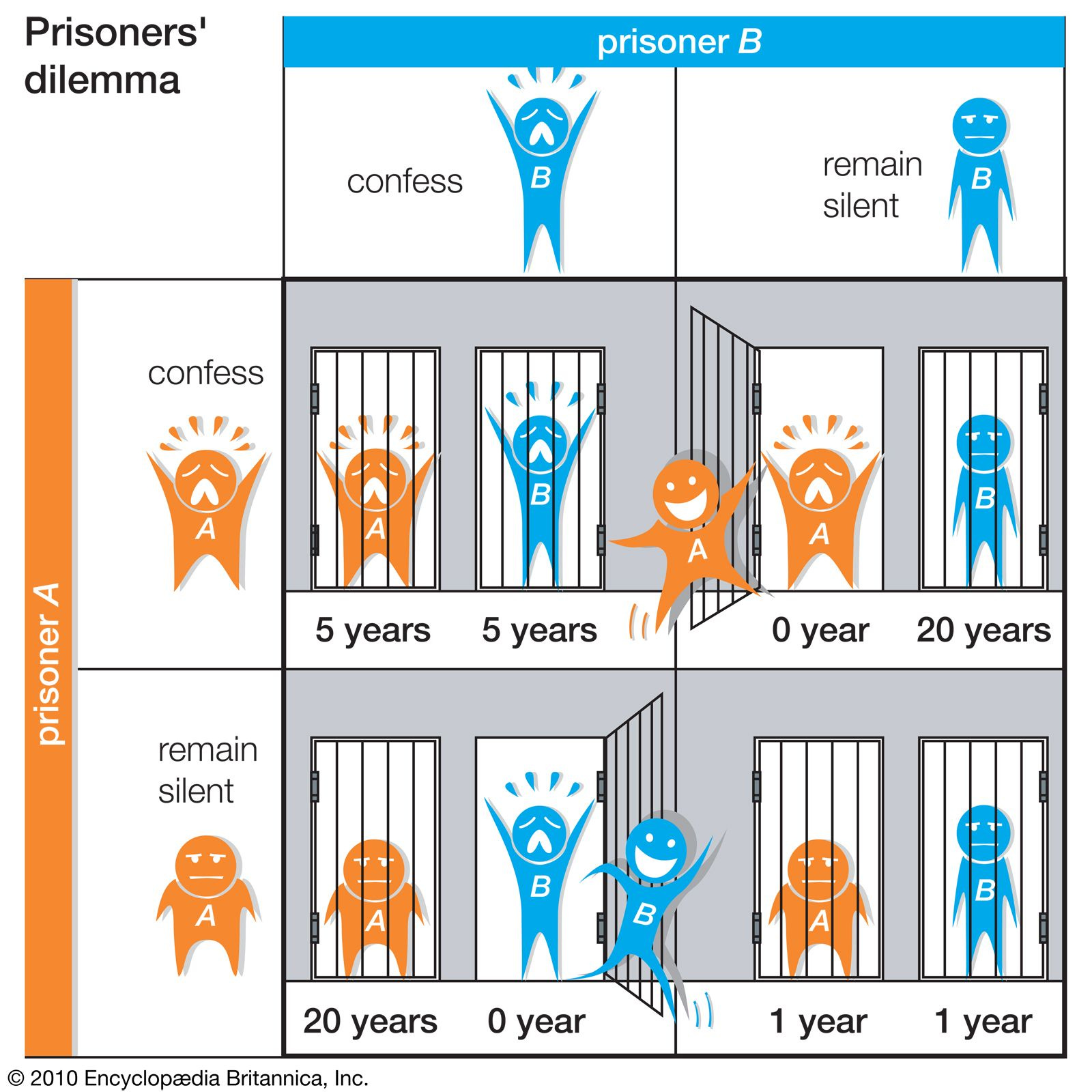
The paradigm, which purports to offer mathematical and logical models for rational decision-making, was developed in the 1950s for American nuclear strategy and metastasized from there to reshape economics, public policy, evolutionary biology, and the development of digital platforms and AI, including how the financial sector trains its traders and builds its machines.
Game theory is a huge and diverse paradigm and can be elegant in its deployments, but is fundamentally modelled on a shrunken, nasty and frankly absurd idealized “player” who acts exclusively in their own self-interest (ie. unlike all but the worst of humans).
As Amadae argues, the influence of the paradigm is something of a self-fulfilling prophesy: as it transforms corporate strategy, public policy, technology and the global economy, it encourages (indeed, demands) the self-seeking, competitive behaviours it claims to model.
If game theory has been essential to and paradigmatic of the emergence of neoliberal capitalism, once again cheating is at that system’s ideological and operational core. I observe that
Within game theory, cheating is defined narrowly as the strategic choice of one player to deviate from a previous cooperative agreement for their own benefit. It is, ultimately, synonymous with defection. For example, if the two accomplices in the [famous] prisoner’s dilemma promised before their arrest to not confess, but one then confesses based on their assumption the other will remain loyal to the promise, the first player can be said to be cheating. And yet in this case and seemingly all cases in game theory, cheating does not actually involve a breaking or bending of the rules, but rather a kind of amoral but not illegal deception of another player. This is not actually cheating at all within the shrunken moral world of game theory: it is perfectly rational if it maximizes a player’s advantage. In fact, one might say that within the paradigm of game theory, cheating per se is impossible: the mathematical model cannot comprehend a deviation from its rules that is not already anticipated within the model.
Normalized cheating in finance
This might then help explain why there is so much cheating in finance. Indeed, I suggest that
the whole history of major turning points in so-called ‘financial innovation’ can be narrated as a series of normalized cheats.
When the joint stock corporation emerged in the sixteenth and seventeenth centuries, allowing many investors to pool resources under a new legal meta-entity, it was decried by contemporaries as a legal but dubious effort to cheat not only the conventional rules of trade (which at the time were very deeply tied to notions of honor, character, Christian ethics, and fraternal relationships) but also God’s exclusive right to create new life.
Similarly, established and conservative bankers and traders were horrified when, in the moment of European powers’ ambitious imperial expansion in the early eighteenth century, class-transgressive ‘stock-jobbers’ cheated the norms of finance (though not the law) and pioneered what would come to be known as retail trading, where securities (in this case investments in dubious colonial ventures) were sold directly to consumers.
In the industrial age, market insiders likewise condemned ‘innovative’ traders’ manipulation of new telegraph technologies to game the markets with complex forms of arbitrage, or to use increasingly integrated and connected global markets to speculate on land or buy and sell derivative contracts tied to the fruits of imperial pillage.
In all these cases and many more the cheat became the rule: within months or years (although often only following scandal and, occasionally, regulation) these techniques would become standard conventions.
The same holds for the twentieth century’s increasingly complex mathematical models, such as those that priced derivatives or portfolios, which enabled powerful trading strategies that upended financial markets and forever changed the way finance operated, contributing to a transition from a conservative, staid, and prudent world of haut-bourgeois civility to a crude game now famous from films like The Wolf of Wall Street.
The Thiel doctrine: Cheat or die
Technofascist tech kingpin Peter Thiel seems to have recognize this and made a business model out of it, using the rapid “advances” of “disruptive” digital technology to sprint past regualtion and establish extractive monopolies.
For him and his many devotees and proteges (including the gang at Palentir and the current US Vice President JD Vance), predatory, rule-breaking behavior
can only be said to be cheating if one fails to understand the true game that is being played. Like the mind-bending, seemingly chaotic moves made by chess- and go-playing AI (some of Thiel’s favorite pet investments), his business model does not explicitly break any rules or laws, just conventions and norms. In fact, they are, according to this philosophy, a more perfect strategy for playing the game of capitalism by its natural and eternal rules. Those who fail to do likewise are cheating themselves by clutching on to an outdated, outmoded set of pieties and expectations.
But beyond just a justification for his own malfeasance, Thiel and co. turn this around to become a justification for their contempt for almost anyone who plays by the rules.
Indeed, within Thiel’s influential worldview, these pieties and expectations are far from innocent: they functioned to protect and enshrine an older, equally manipulative (but far less honest) elite, who were served well by a mutual agreement to uphold those norms and keep challenging any innovative newcomers out of the game, like snobbish imperial universities of old who claimed they were open to anyone, so long as they could speak basic Latin and Greek, knowing full well only elites would have been educated to do so. Indeed, within this worldview, it is the old residual elites who are cheating: they are bending the game around an unspoken set of non-transparent norms that, effectively, become rules. He, and those like him, are merely playing the game as it was always intended to be played, ruthlessly.
On cheating fascists and the rest of us abtuse spoilsports
At the end of the paper, I take up the famed theorist of games Johann Huizinga’s well-known distinction between our tolerance for cheats and our hatred of spoilsports. I argue that, in games as well as within the capitalist game we are all forced to play,
When cheating is discovered, the other players are faced with a choice. Do we refuse to play any furthers, or kick the cheat out and thereby jeopardize the game? Or do we all now begin to cheat, reasoning that it is the only way to win? Part of us even admires the cheat for their cunning…
In their attempt to win, they have transgressed the norms of fair play, but not catastrophically. They did as any player would, had they the courage or intelligence to do so. Ultimately, we accept the cheat because they do not call into question the motivations, legitimacy, and sense of agency of us as players; they in fact vivify it in magnified form.
Meanwhile, the spoilsport must be excluded and castigated not only because they make the game unfun, but because they call into question the game itself and, more vexingly, the subjectivity and sense of agency of the other players. If we are all playing (and enjoying, and betting on) a broken or rigged game, what does the spoil-sport’s refusal imply about the rest of us? We are dupes, or complicit, or both.
In continue:
And what if the game were compulsory, and its outcomes determined our lives? What if we had come to imagine that the game was natural, normal, and eternal? In that case, the cheat’s actions and motivations would certainly be understandable, given the stakes.
And the spoilsport? What good would their complaints about the game’s inherent injustice or unfairness do any of us? The spoilsport may indeed tell us we ought to play a different game. They might argue that the game relies on us, the players, more than we, the players, depend on the game.
But it gets worse. The spoilsport in some ways becomes the scapegoat.
And yet for those of us who play and imagine we have a chance to win, or even those of us who acknowledge the game is rigged but still are not the greatest of all of its losers – for us, the spoilsport is at best a hopeless romantic and at worst that most reprehensible of cheats: one whose criticism of the game is just a ploy to distract us from our competitive pursuits with sanctimonious pieties, or to hoodwink us into come kind of doomed collaboration from which they will no doubt come out ahead. If we are all cheats at heart, then the spoilsport is either the worst cheat (in denial of the fact) or the very best, for which they can never be forgiven.
This sets the stage for the final turn of the screw
this might help us understand the success of far-right, reactionary, and neofascist political actors who promise to take revenge on those whom they present as cheats: welfare claimants allegedly gaming the system; migrants who cross borders outside the legal frameworks; nebulously defined ‘elites’ (a term that conveniently often conflates or substitutes cultural for economic capital) who manipulate the otherwise fair and meritocratic system; and minorities that manipulate the guilt of majorities to gain special advantage.
Numerous prominent left-wing and progressive parties and commentators have, rightly, observed that these targets of reactionary rage are almost insignificant in their effects on the economy and working peoples’ lives. This is especially so compared to the massive forms of corporate and financial cheating happening in plain sight. The world’s real economic elites today squirrel hundreds of billions away in tax havens; golden visa programs allow them to avoid the law; corporations hire armies of lawyers and lobbyists to sabotage any efforts to hold them to account for labor, environmental, and other infractions.
And yet, these facts appear to have little influence. Instead, conspiracism is mushrooming: a general paranoid search for nefarious actors who are cheating the system, rather than a reckoning with a system that is built on cheats and makes cheats of us all.
Perhaps this is because subjects habituated to a form of gamified capitalism distrust and resent the spoilsports who call into question the legitimacy of the game. To play the game of neoliberal, financialized capitalism is to be afforded a sabotaged agency. One clings to it not because it promises redemption and success, but because without it one cannot imagine what agency would be: one would be a loser, not a player.
Everybody has a sneaking suspicion the game is rigged, but few are afforded the systematic opportunities to imagine a dignified life beyond the game. We are, then, inclined towards the emotive claim that some people are cheating and also resentful toward those who would (rightly) point out that the game is rigged, which we all know but cannot truly admit.
The bombastic cheat, who promises that, by cheating, they will make the game fair, holds a special and dangerous place in our political imagination.