
A note against hope
plus UK games tour in March and Toronto Fighting Fascist Feelings workshop in April
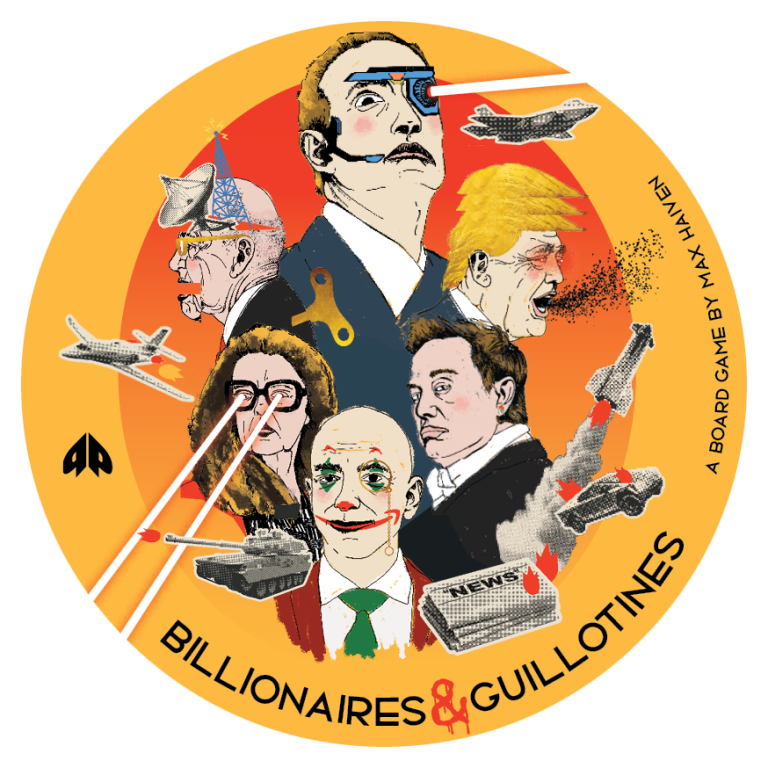
I’m on tour with Billionaires & Guillotines throughout the UK this month
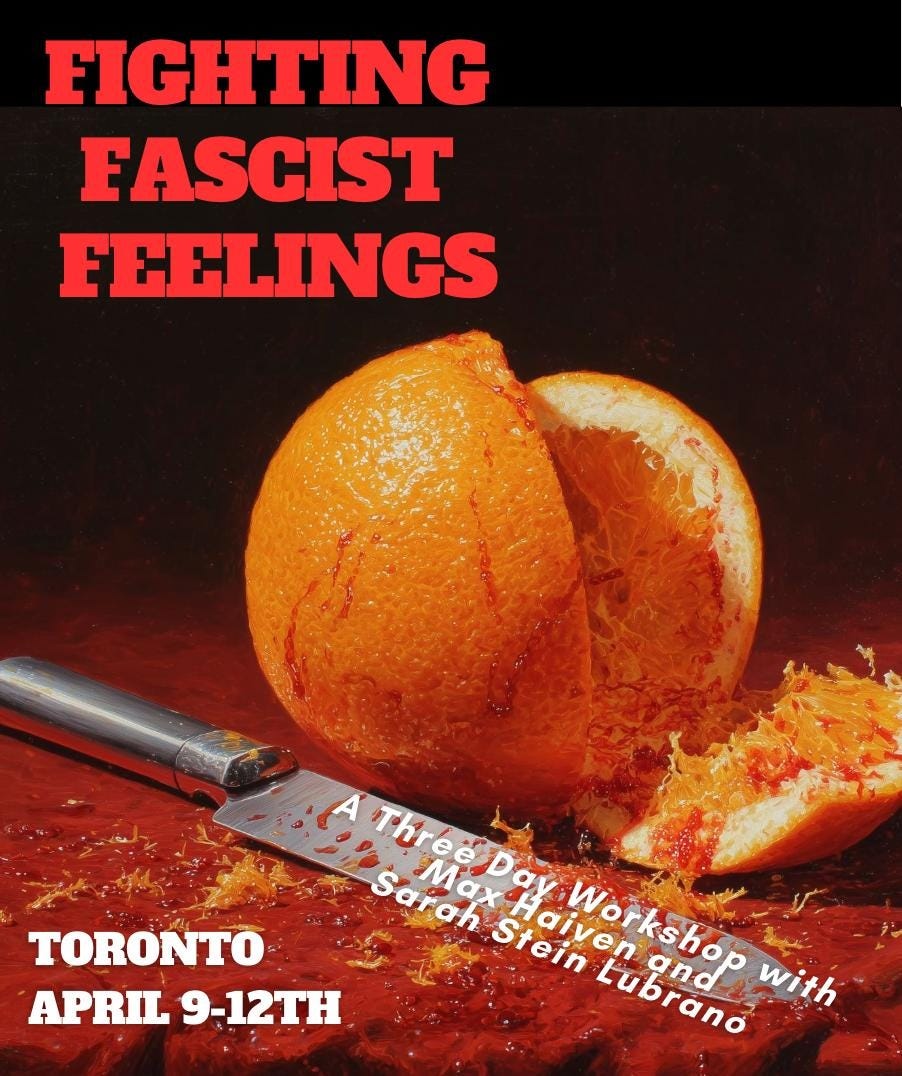
Next month I’ll be co-facilitating a Fighting Fascist Feelings workshop in Toronto
I have given… many talks about the radical imagination and similar topics since my co-authored book of that title was published over a decade ago. I am consistently surprised when people in the audience of these talks want to talk about the importance of hope. They are surprised when I tell them I don’t really believe in it.
I think hope is something that middle class people think is necessary for other people to possess before those people stage an uprising or demand justice. Or maybe more accurately, middle class people have a tendency to blame a lack of uprisings or movements on a lack of hope.
The trouble with hope
First, I think it gets something wrong about resistance. It tends to assume that it will come in an impressive form. This perhaps ignores all of the way poor and oppressed people resist every day through what has been termed micropolitics: small acts of solidarity and defiance that fly under the radar of the powerful, holding fast to care and dignity in the face of abandonment and violence… Such resistance is rarely morally unambiguous. It cannot, in and of itself, bring down a system of domination. But we ignore it at our peril. It is rarely hopeful or inspired by hope - actually probably quite the opposite.
Second, from my research and observations, hope actually seems to have little to nothing to do with uprisings and resistance. I have yet to see any really convincing evidence that people need to be hopeful about change or about the future before they organize, mobilize or protest. In fact, the opposite often seems to be true: people tend to rise up from a place of hopelessness, out of rage against the status quo, out of an inability to tolerate oppression and injustice any longer, even if they are pessimistic or have no substantive vision of what comes next.
In fact, I think if you’re really enduring oppression, often hope hurts. To dwell to long with the idea that the world can be different not only feels like a waste of time, it also bring your suffering and that of the people you love into sharper contrast.
To be blunt, I think the idea that we must be able to hope for different world (of justice, peace, etc.) in order to create it is just wrong. It also risks belittling as nihilistic the violence and destruction that oppressed people often unleash when they do rise up. As Franz Fanon and his many interpreters make clear, violence can be an important method of liberation when one already lives amidst a silent, systemic violence.
I’m not advocating violence for its own sake. I’ve never used violence and I hope never to have to. But we do need to be attentive to how a moralistic reaction to the potential for violence sabotages our imaginations and our solidarities.
Why do we believe hope is necessary?
In the first place, I think for some people it is intuitive; it just seems to make sense: If you want to bake a cake, you have to envision it first and presumably fetch the right ingredients, then combine them in order. Without a vision of the delicious cake, you might not bother.
But social movements are not cakes and their history seems to reveal that, more often then not, a vision of a different society emerges during struggles, rather than before.
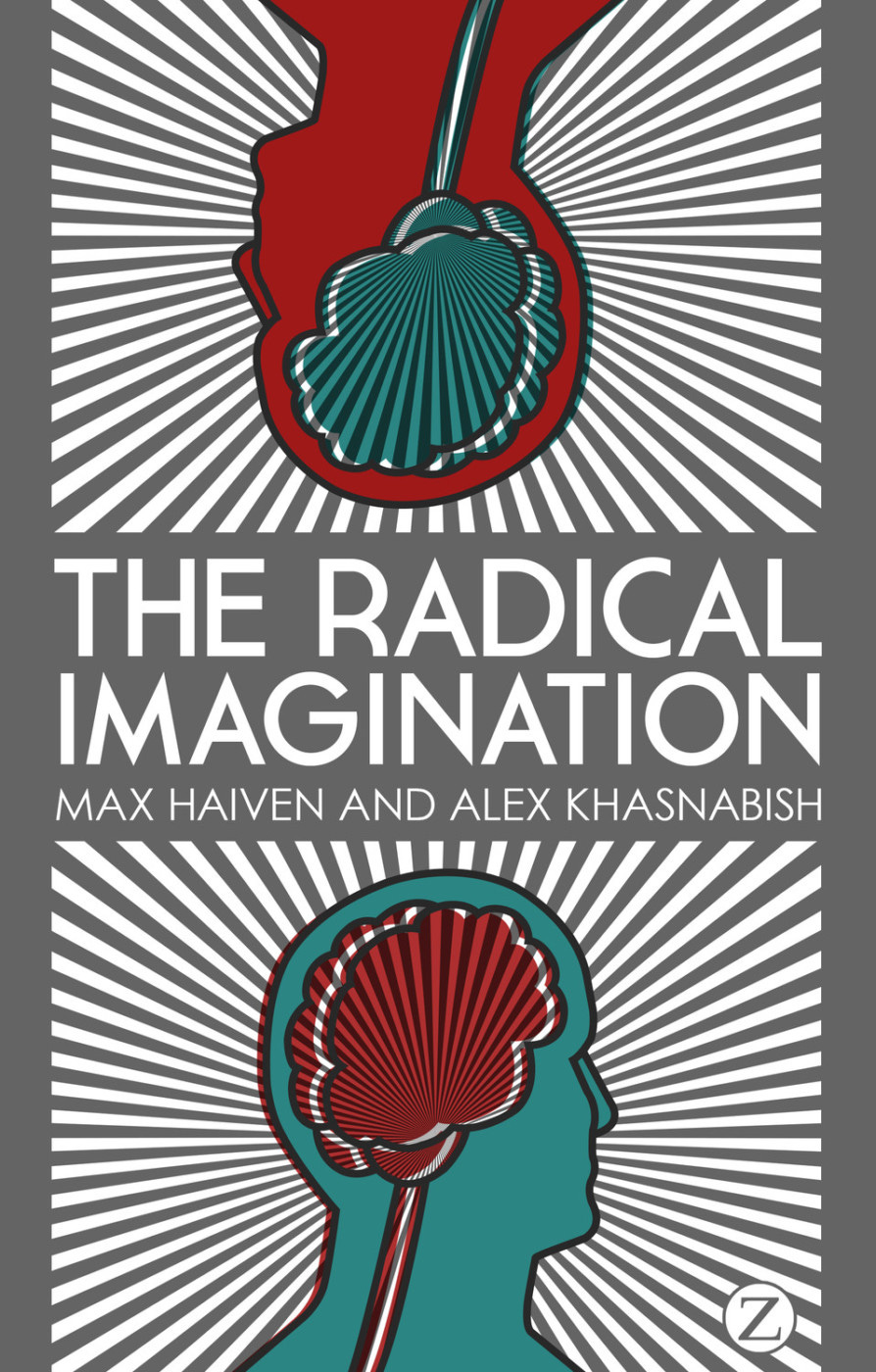
As Alex Khasnabish and I argued, the radical imagination sparks when people struggle, together, against intolerable injustice. Their visions emerge from the material experience of working together in ways that are dissonant with the dominant order that structures social collaboration (eg. capitalism, the family, representative democracy, etc.). It is the lived experience of fighting back that fires the imagination, not the other way around. This is something that, frustratingly, many people misunderstand about our approach.
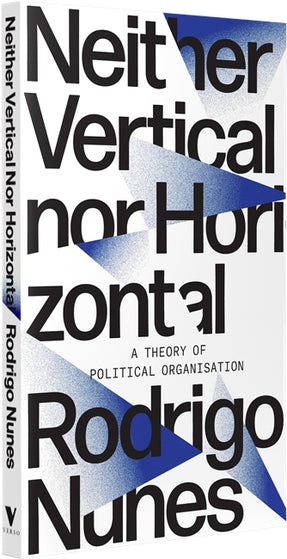
I suspect that many people fear that, unless we know what we’re fighting for, the fires of revolution and resistance could, once unleashed, spread out of control. But even a great plan doesn’t prevent those fires from spreading; that’s a risk we have to take. It is extremely rare that any revolutionary or radical change develops according to plan or some unifying utopian vision. As Rodrigo Nunes argues in his excellent book Neither Vertical nor Horizontal, plans and visions are important, especially when they emerge from organizations, but they exist within movement ecosystems where no person or organization is ever entirely in control (thank god) and the result emerges from conflict and compromise.
Hope: A middle-class addiction?
Here we come to the nub of the issue. I think those most attracted to hope (beyond simply Christians or those raised in Christian cultural milieus, where hope in the Second Coming is theologically central) are people who have something to lose. That’s why I observe the demand for hope so much in middle class people (of whom I am one, at least in terms of upbringing, current socioeconomic position, and my disgusting bourgeois taste for HBO, classical music and expensive coffee).
The ideal of hope captivates those of us who have been brought up to think that our plans might come true and had the experience of that happening. The sociological literature confirms that most poor and oppressed people have not been encouraged to plan or expect their plans to come to pass, and very often their experience is that their plans get ruined by circumstance. Middle class people are typically told that if you have a dream, you can achieve it with hard work and talent. Poor and oppressed people are often taught by bitter experience that hard work and talent get you… more hard work, usually for someone else’s benefit.
I’m not disputing that hopelessness is part of the experience of oppression. But I don’t think hope is necessarily the solution.
I think that our idea that we need hope to have struggle does a few things for (us) middle class people.
It creates a glamorous role for those of us who are educators, cultural workers or other intermediaries within the system. We tell ourselves that our work “builds hope.” Does it? Why does that matter? Who asked us for hope? (I’m being brutally introspective here).
As long as we wait for hope to arrive (in the other), we actually don’t have to do very much. If we accept the hypothesis that hope is the prerequiste of real struggle, than any struggle or form of resistance that doesn’t wear its hope conspicuously on its sleeve can be dismissed as nihilistic or ephemeral or not a real struggle at all.
I think we want to feel hope, because the world is an awful unjust place. We feel hopeless, and so we imagine that if we had this thing we call hope, we’d feel better and be able to do more. We basically mistake hope for power. We assume other people must feel like us.
Let me say that I don’t see being middle class as a moral failing. These are the cards some of us have been dealt. But under capitalism, middle class people tend to imagine that our ideas, habits and preferences are universal or the norm. And often middle-class values and ways of thinking become dominant in social movement discourse, perhaps because of the influence of the university and the professionalization of community organizing.
After hope?
Of course, in the end, I’m not really against hope. I’ve felt it once or twice and it was pretty nice. But it’s not what keeps me going, nor most of the enduring organizers I have spoken with or interviewed. It’s not what appears to prevent burnout. It’s not necessary for struggle.
If you experience hope, I’m happy for you. But I don’t think hopeful people are any more likely to participate in struggles, and I think the expectation that people ought to be hopeful is a bit like the expectation people should be happy: strangely coercive.
Here are the things that, in my experience and research, are much more important to struggles:
Shared outrage (yes, perhaps this is tied in some sense to the vague notion that injustice is not necessary, but that’s far from hope)
Generative relationships (most organizers I’ve met or interviewed gain strength and conviction from their friends and comrades)
Radical and revolutionary organization (visions and plans emerge from and live within groups, parties, assemblies, etc.)
Rigorous analysis of history and the present (we can take inspiration from past struggles and also understand the real possibilities for change within, against and beyond the dominant order)
Collective joy (the experience of being fully, complexly human together, in all our weird and messy beauty)
What do you think?
Anyway, I’m on tour in the UK
As you likely know, my board game Billionaires & Guillotines is out now from Pluto Press. You can order it at a 10% discount using the code BGTOUR. But if you come to but it from me at an event, I can sell it to you at 30% off, and you save on shipping.
Also, you can buy shirts, sweaters, bags and more cool stuff from my web store (it’s all ethical and greens and such).
SUSSEX- March 5 - Sussex UniversityRadical Library- 3pmBRIGHTON- March 6 -Lark and BloomLibrary - 7pmMANCHESTER - March 11 - Manchester Games Centre - 4pm
LEEDS - March 12 - Left Bank - 7pm
DURHAM - March 13 - Durham University - 1pm and 7pm
EDINBURGH - March 14 - Ancient Robot Games - 2-5pm
GLASGOW - March 16 - TBA - 7pm
GLASGOW - March 17 - Glasgow University 10am (play), 3pm (talk)
COPENHAGEN - March 20 - IP University (talk) - 3pm
COPENHAGEN - March 21 - Bastard Cafe - 3-7pm
EXETER - March 26 - University of Exeter
BRISTOL - March 27 - Pervasive Media Studio (talk) - 1pm
BRISTOL - March 27 - TBA - 7pm
LONDON - March 30 - Pulse and Pickle (Walthamstow) - 6pm
Fighting Fascist Feelings in Toronto
Hot off our very successful one-day event in London, Sarah Stein Lubrano and I will be in Toronto April 10-12 for a three-day edition of our Fighting Fascist Feelings workshop.
Fascism is on the rise thanks to scheming billionaires, capitalist crisis, patriarchal power struggles, resurgent racism and imperialism, vicious nationalism and so much more.
As we struggle against fascism and the systems that created it, we want to pause to ask: what motivates the fascist imagination and what attracts people to fascism, historically and today? These questions are key to understanding the enemy and strategizing for a better future.
Sense & Solidarity presents a four-day intensive in Toronto for those deeply engaged in projects that are pushing back against the rising authoritarian, reactionary, and fascist elements of society. Perhaps you’re community organizing. Maybe you’re making transformative art or doing radical research. Or it’s possible you’ve taken to the streets. If you want to think more deeply about both theory and strategy (and meet likeminded committed people) we hope you’ll join us.
For more information and to register, visit: https://senseandsolidarity.org/toronto/
Thanks Max, as always. Your post made me think about an extraordinary book I read in a class with Jim Scott, whose own work was about non-state change from below--Elizabeth Janeway's Powers of the Weak, a book I very often come back to:
https://neglectedbooks.com/?p=4586.
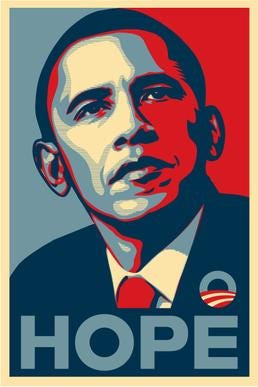
I do think you're missing an important context around Obama specifically and a message of hope beyond hope that he embodieded for many African Americans and others-- even as that, yes you're right, failed. I would still say that the language of hope in that context has legs that go places the middle class white xtian legacy hope you're taking aim at doesn't.
I like very much the list of real possible actions you name at the end. Yes and yes.
I'm on the same wavelength, for sure. As Blindboy Boatclub put it, at the bottom of Pandora's box, hope was actually the cruellest trick, persuading people to keep doing the things that hurt them, hoping for things to get better (though he put it much better than that; I'll have to dig out the podcast episode). I'm often asked what gives me hope, probably something to do with what I've just been telling them about. I eventually decided that maybe what keeps me going is mostly stubbornness, duty, and love, and what I seek is inspiration, including several of the elements you identify. The space between love, outrage, and grief is full of energy.
As for what sparks revolt out of suffering, the suggestion that's stuck with me is that it's dignity, that there is a point where people's dignity is so insulted that they feel it an affront to their very humanity and they are willing to do anything. The emblematic example is Mohamed Bouazizi, the Tunisian street vendor whose self-immolation sparked the (ill-fated) Arab Spring.
The other thing that occurs to me is that when you say "the radical imagination sparks when people struggle, together, against intolerable injustice. Their visions emerge from the material experience..." etc. it sounds a lot like Zapatismo.
Just a few disjointed thoughts before bedtime!